Put an IWC beside a Grana. Both have large Arabic numerals, a dark dial and small seconds at six. The cases differ, the fours curve differently, and the hands have different proportions. Yet the first impression is how much the two watches resemble one another. They are not variants of the same model.
Both were made for the British Army, to requirements every supplier had to work within. A manufacturer’s name could remain on the dial, but it did not determine the watch’s priorities. The customer wanted a legible, dependable instrument with better protection than earlier equipment offered.
Collectors now call this group of watches from twelve makers the Dirty Dozen. The nickname came later, borrowing the title of the war film. The designation on the original case backs was rather less dramatic: W.W.W.
The job came first
Late on 5 June 1944, four British parachute officers synchronised their watches at RAF Harwell. An Armstrong Whitworth Albemarle stood behind them, ready for departure. E. G. Malindine’s photograph needs little explanation. Several people were about to act separately, and they needed to agree on the time.
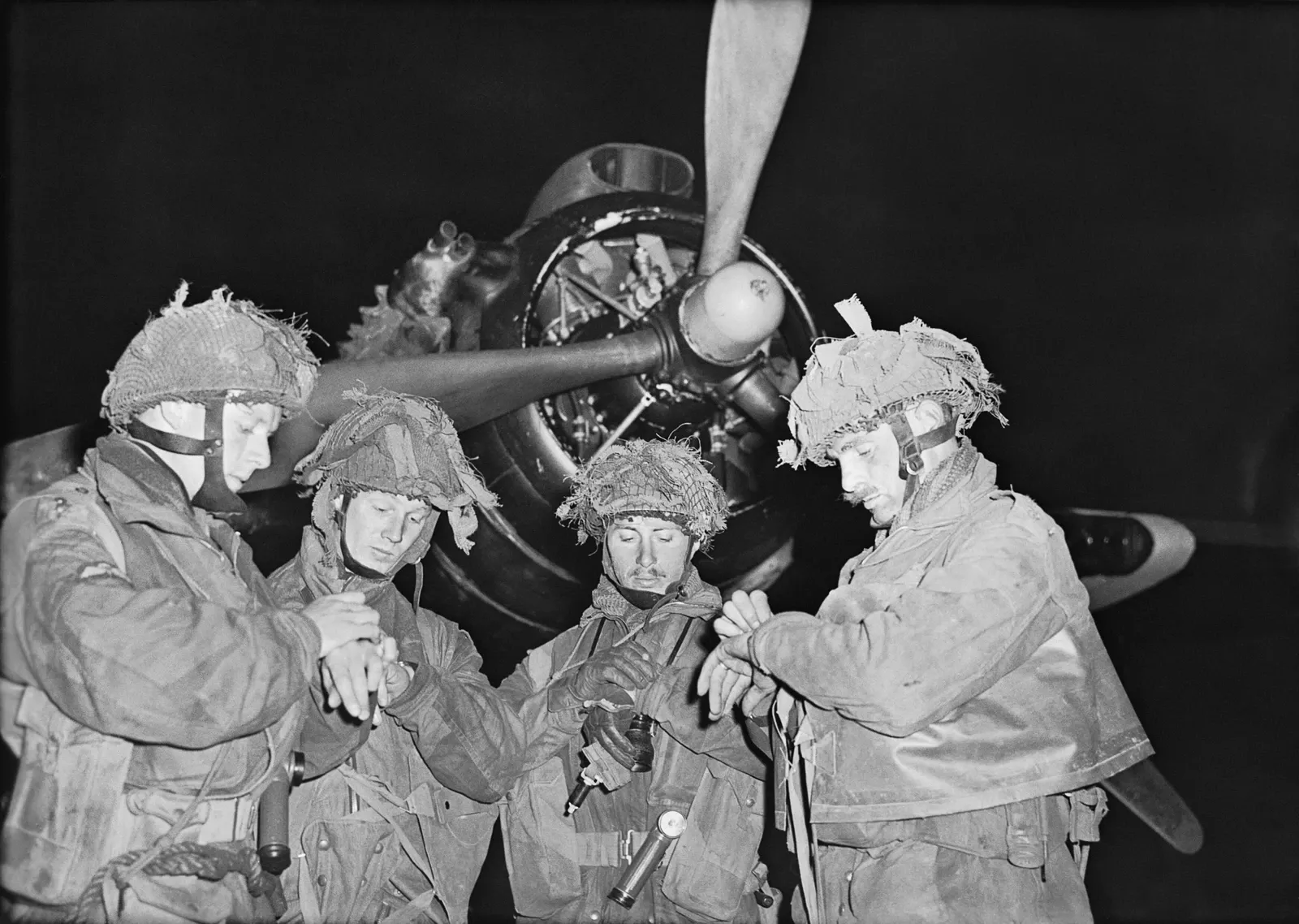
Harwell, 5 June 1944. Photograph: E. G. Malindine / War Office, IWM H39070, public domain. This documents military time coordination, not W.W.W. watches in action; the watch models worn are not identified here.
The armed forces had certainly not just discovered timekeeping. British equipment lists addressed watches long before the Second World War. Early wartime wristwatch procurement used the Army Trade Pattern, or A.T.P., including civilian designs adapted for service. America’s A-11 also preceded the W.W.W., with defined military requirements of its own.
Calling the W.W.W. the first true military watch specification would therefore go too far. Its importance lies in a more consistent, purpose-led set of requirements for a general-service British Army wristwatch. Rather than looking through a shop’s stock for something approximately suitable, the customer asked suppliers to deliver watches for a defined job.
What did the three Ws mean?
In military inventory language, the designation was Watches, Wristlet, Waterproof. The familiar wording Watch, Wrist, Waterproof points to the same category. The specification carried the reference R.S./Prov/4373A. The relevant wartime institutions were the War Office and Ministry of Supply; the modern shorthand MoD can obscure that administrative background.
The requirements went beneath the dial. They called for a non-magnetic lever movement with at least fifteen jewels, an overcoil balance spring and approved shock protection. Rate testing was specified at 32 °C in four positions. These were requirements, not proof that every delivered watch fulfilled them in every respect. That distinction becomes important later.
Surviving examples make it easy to see how practical requirements shaped their appearance:
| Recurring feature | What it offered the wearer |
|---|---|
| Black dial and light Arabic numerals | Strong contrast and clearly distinguishable hours. |
| Prominent minute track | Readable minutes rather than an approximate impression of the time. |
| Luminous markings and hands | Points of reference in poor light. |
| Small seconds at six | A separate place for seconds beneath the main hands. |
| Fixed strap bars | A simple, substantial attachment for a pass-through strap. |
| Closed back and protective case | Construction intended to shelter the movement from its surroundings. |
This did not amount to a single mandatory case drawing. Movements and construction details varied between makers. Similar faces did not conceal twelve mechanically interchangeable watches. IWC’s snap-on back and Longines’ screw-down back are useful examples of different engineering answers to a shared need.
Nor should waterproof be read as though it were a present-day dive-watch specification. A period designation says nothing definite about what an individual case and its seals can withstand eighty years later. W.W.W. is historical evidence, not a current water-resistance guarantee.
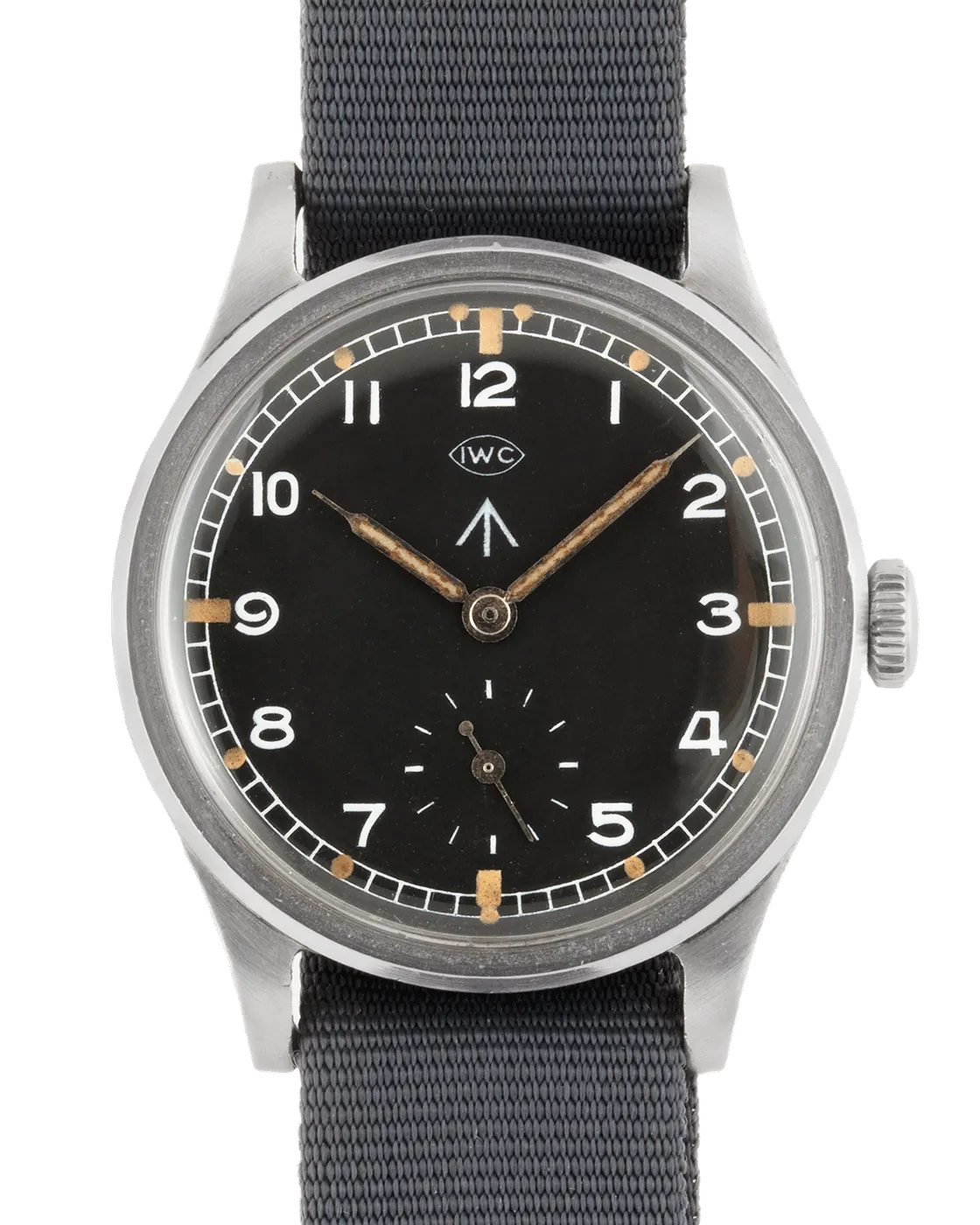
IWC W.W.W., circa 1945. Photograph: S.Song Watches. Background removed by Lume without reconstructing watch details. The modern fabric strap in the photograph is not evidence of wartime provenance.
The twelve names
The group comprises Buren, Cyma, Eterna, Grana, IWC, Jaeger-LeCoultre, Lemania, Longines, Omega, Record, Timor and Vertex. It would be an unusual gathering in a modern watch-shop window. Here, they were participants in the same procurement programme.
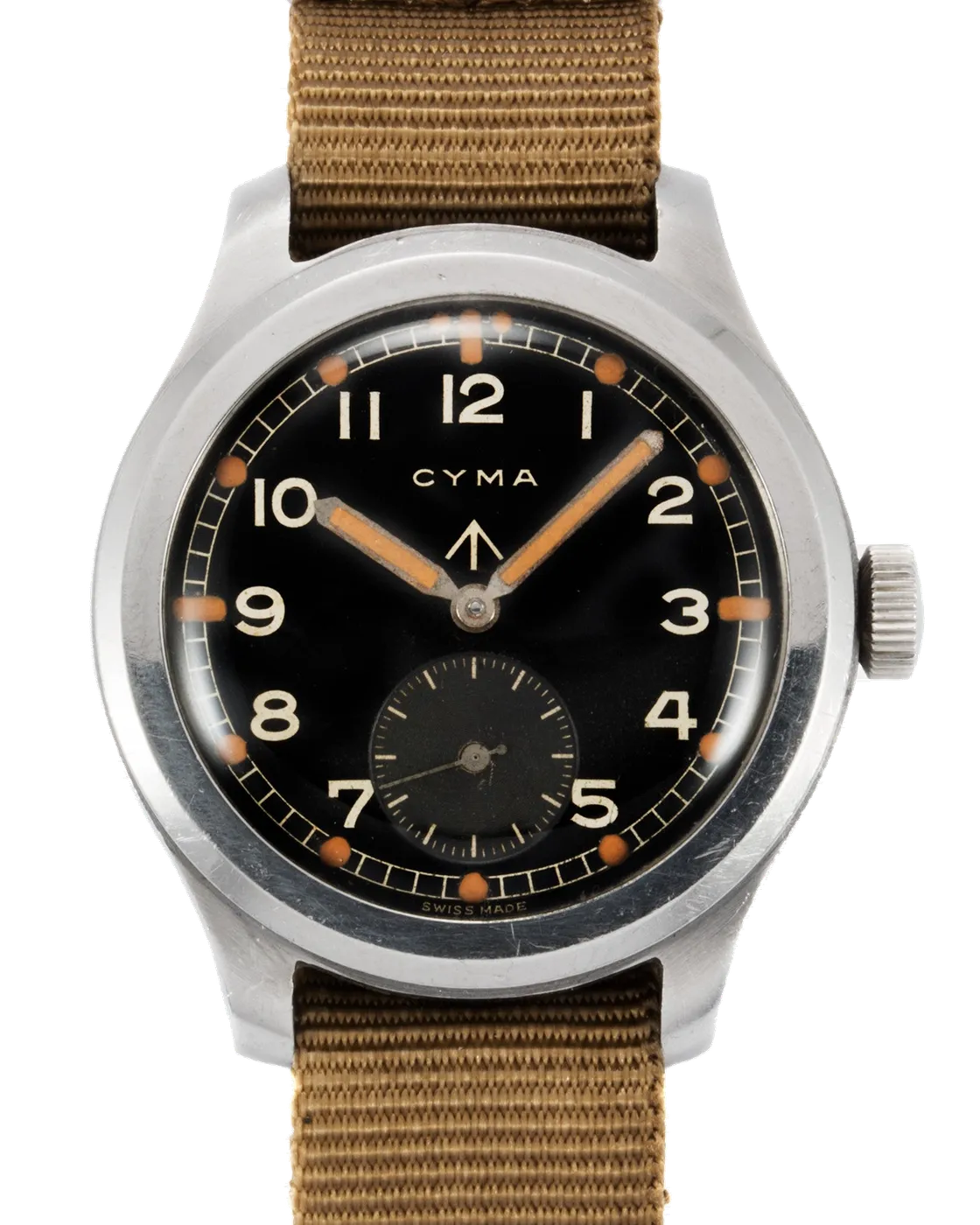
Cyma W.W.W. Its substantial hands and seconds register give the dial different proportions from the IWC’s. Photograph: S.Song Watches; background removal: Lume. The strap is not presented as a wartime accessory.
Even the convenient phrase “twelve Swiss factories” needs qualification. Vertex is the clearest example: Claude Lyons’ London-rooted business relied on Swiss production, working with Revue Thommen. The brand, the company handling an order and the actual manufacturer were not necessarily the same organisation.
That is part of what makes this group interesting. A shared brand identity did not unite it. A shared customer and purpose did. The resemblance between the watches is better understood as the outcome of that common brief than as an attempt to imitate a competitor.
IWC: not an early Mark 11
IWC used its hand-wound calibre 83. The company’s historical account records approximately 6,000 watches and deliveries to Britain in May and June 1945. On the illustrated 35 mm example, the narrow bezel and minute track reaching towards the edge leave a generous amount of room for the dial.
Collectors frequently call it the Mark X, but that later name should not replace its contemporary W.W.W. designation. The subsequent RAF Mark 11 belongs to a different programme with different requirements. Their relationship does not make the 1945 general-service watch a specialised navigation instrument.
Longines: a different case for the same job
Longines reference 5707 used the hand-wound 12.68Z movement. Its stepped bezel is more pronounced, giving the dial a different frame from the IWC’s. The black ground, light numerals and seconds register at six nevertheless make the family resemblance unmistakable.
A watch catalogued by Antiquorum came with a factory archive extract recording its invoice to Britain’s Baume & Co. on 17 July 1945. That is more useful than an attractive battlefield anecdote. It establishes one verifiable point in the object’s history without inventing an owner or an operation it might have accompanied.
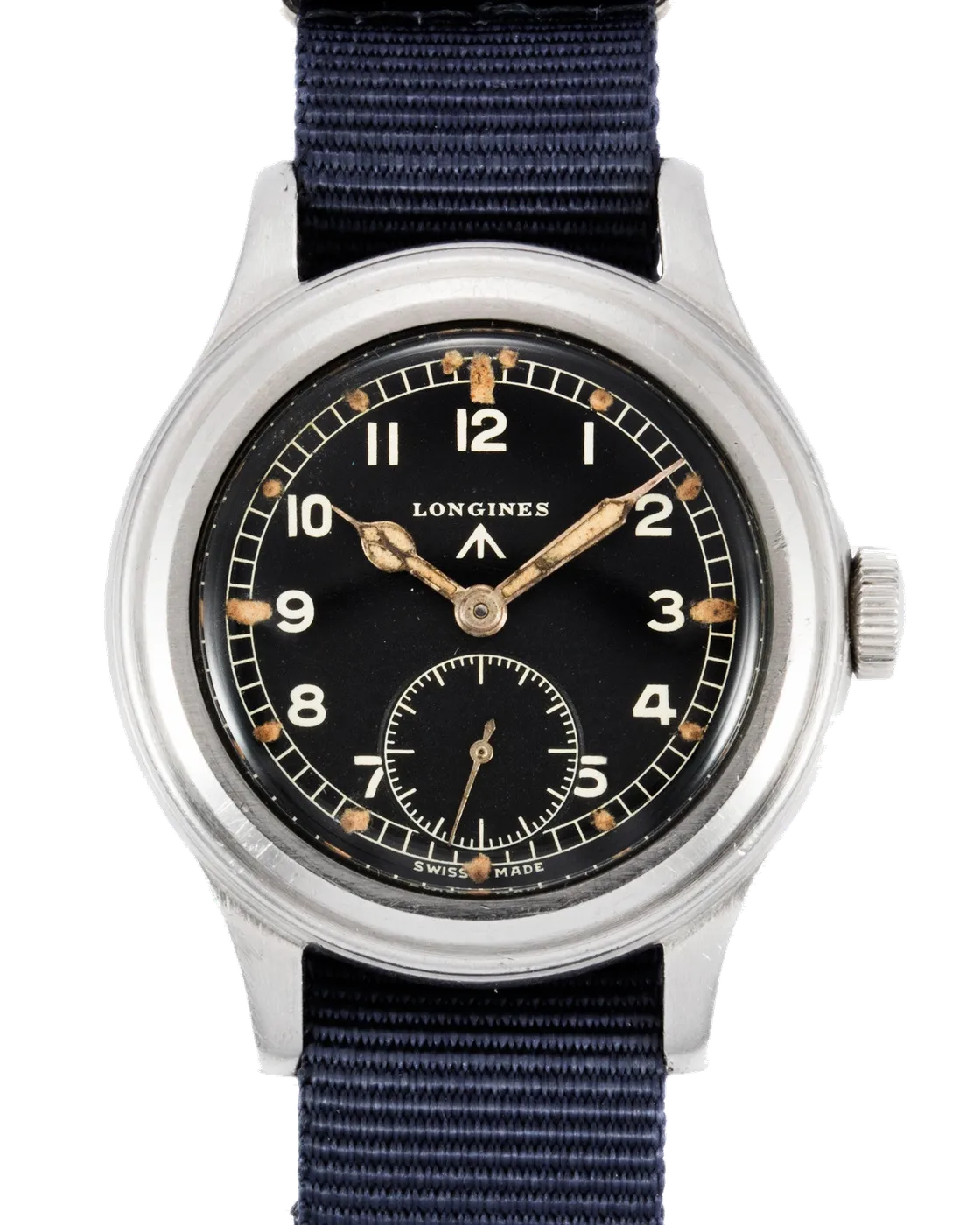
Longines W.W.W., showing its distinctive bezel and segmented hour hand. Photograph: S.Song Watches; background removal: Lume. This is another example of the type, not the Antiquorum lot discussed above.
Grana: rarity is not a military ranking
Grana’s KF320-powered W.W.W. is especially sought after by collectors assembling the whole group. Bonhams associates it with the lowest estimated production among the twelve. That cautious description is more defensible than presenting a disputed production total as an exact count.
Its rarity today does not mean it was necessarily the best watch for a soldier. A collector is looking for the missing piece in a collection. The original customer wanted equipment that met the requirement. They are considering the same object from quite different positions.
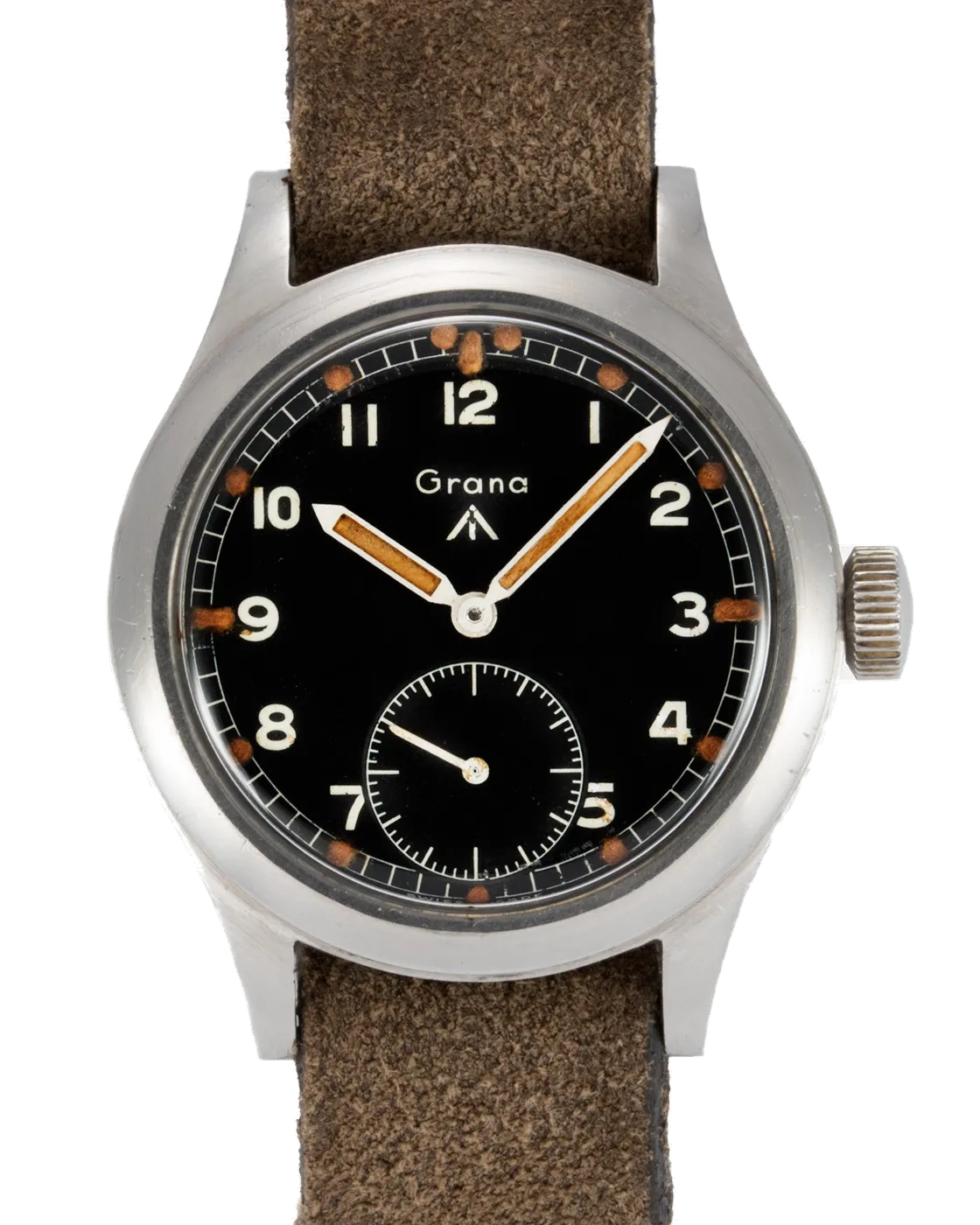
Grana W.W.W. Its light hand frames and narrow minute track can be compared with the Longines details. Photograph: S.Song Watches; background removal: Lume. The leather strap is not presented as a wartime accessory.
Vertex: the British connection
Henry Lazarus, the founder’s son-in-law, connected the Vertex family business with military procurement. The company’s account also records his service as a British Army officer. Behind these watches was more than a Swiss manufacturing relationship: there was a British business with personal and commercial links to the Army.
Neither Vertex nor Timor needs to be discussed exclusively in the past tense today. Both offer watches that revisit their military designs. A smaller name’s story did not necessarily end when it disappeared from most shop windows.
The small arrow on the dial
Beneath the IWC logo sits an upward-pointing mark made of three strokes. The broad arrow denotes British government property. It is neither the manufacturer’s emblem nor a separate certification of accuracy. Case-back markings, the letters W.W.W. and identifying numbers placed the watch within the military equipment system.
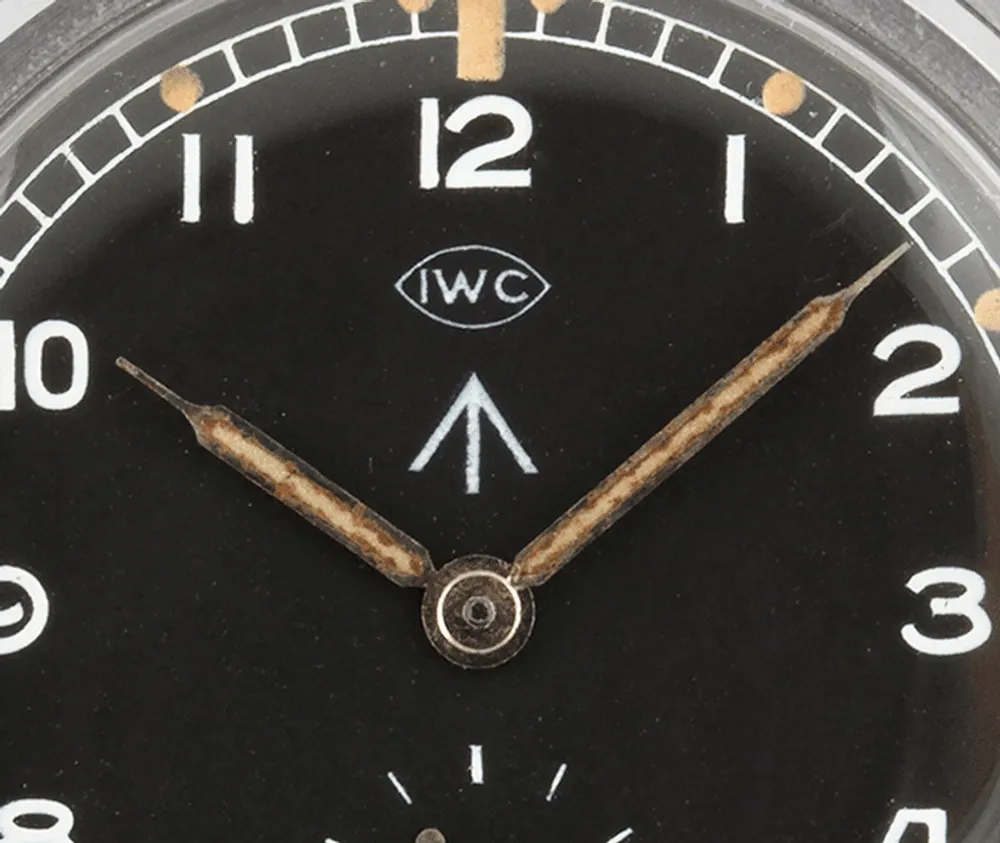
Maker’s name above property mark. Original IWC dial detail from the S.Song Watches photograph; crop by Lume.
It is easy to read every one of these details as styling now. The arrow, slightly irregular numerals and aged luminous material make a distinctive whole. But the arrow originally identified ownership; it was not added to create atmosphere. Knowing that makes it more interesting, not less attractive.
The Eterna detail below shows the same arrangement expressed through different lettering and hands. The ageing visible on its dial and crystal belongs to the object as photographed. A photograph alone cannot establish whether every component remains as it left the factory.
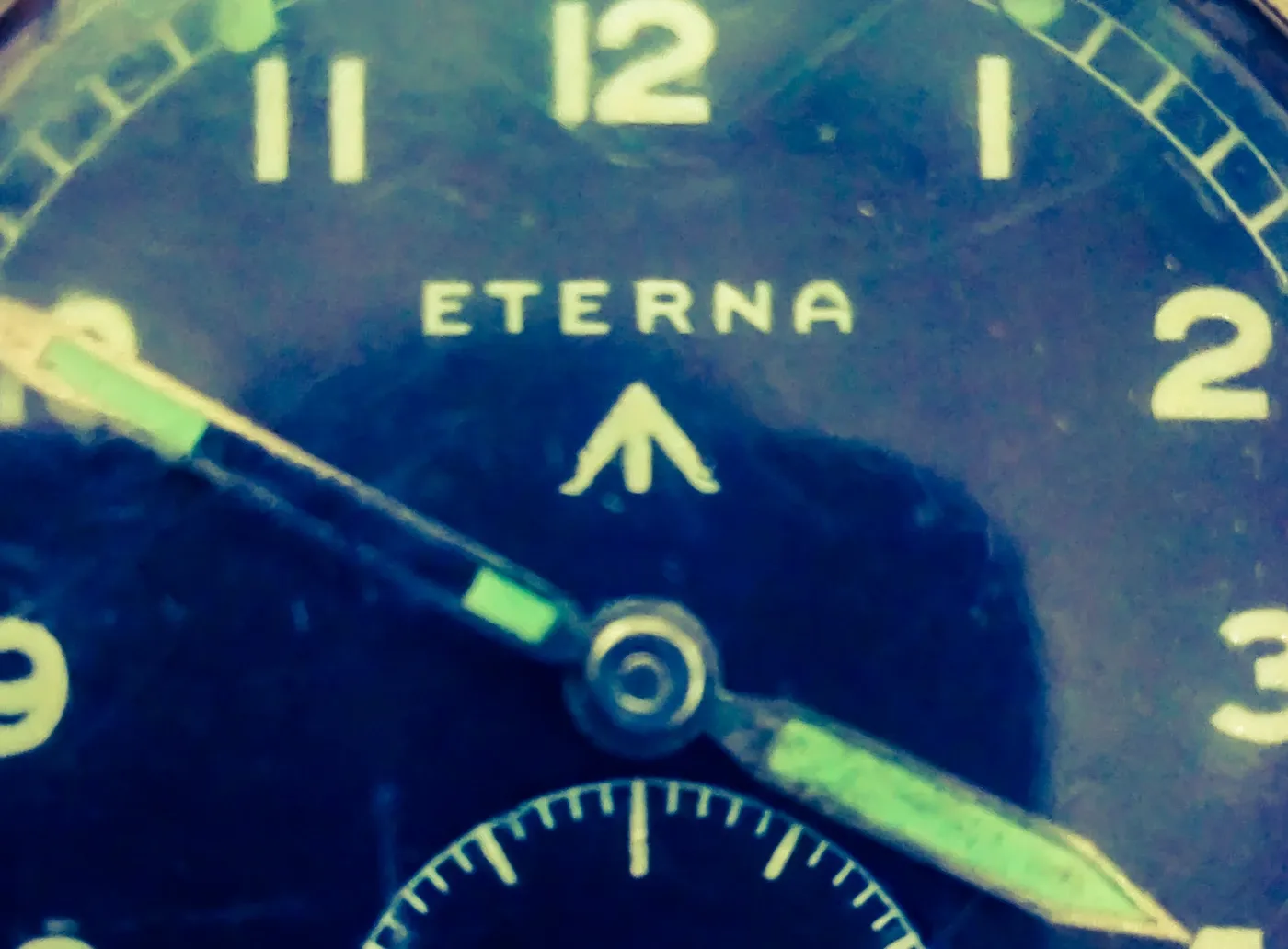
Eterna dial detail. Photograph: Stephenjh / Wikimedia Commons, CC BY-SA 4.0. Crop and resize by Lume, under the same licence. Original photograph and licence are linked in the sources.
Strict requirements did not produce perfect watches
Requirements and delivered performance need to be distinguished. David Read’s archival research records shortcomings involving shock protection and corrosion. A Vertex used in Malaya later became the subject of a specific case-corrosion investigation. The W.W.W. story is not a procession of flawless objects: experience in service exposed things that needed improvement.
The dates also encourage restraint. IWC documents deliveries in late spring 1945, while the Longines invoice discussed above dates to July. The group cannot simply be presented as the watches of the Normandy landings. A design created for war does not necessarily enter the story during its best-known scene.
This distinction remains useful when looking at an old watch. Military markings can support its intended service role. A particular battlefield story requires particular evidence. An evocative photograph cannot bridge the gap on its own.
What survives in a modern field watch?
Today’s field watches repeatedly return to the same choices: large numerals, a straightforward minute track, clearly differentiated hands and a dial without unnecessary displays. The W.W.W. is an important historical model for that approach, but not its sole ancestor. American military wristwatches and other British service types belong in the picture too.
The Timor Heritage Field and Vertex’s contemporary military-inspired watches make that connection more directly. Today’s buyer can choose, compare and exercise personal taste. The object’s role has changed even where its appearance remains familiar: equipment once issued is now deliberately sought out.
What I find most interesting about the twelve is how much difference survived within such a narrow brief. A curve in a case, the width of a hand or the size of a seconds register can make two nearly identical objects feel different. Try mentally covering the names before looking through them. It becomes easier to notice the design when the logo is no longer telling you where to look.